|
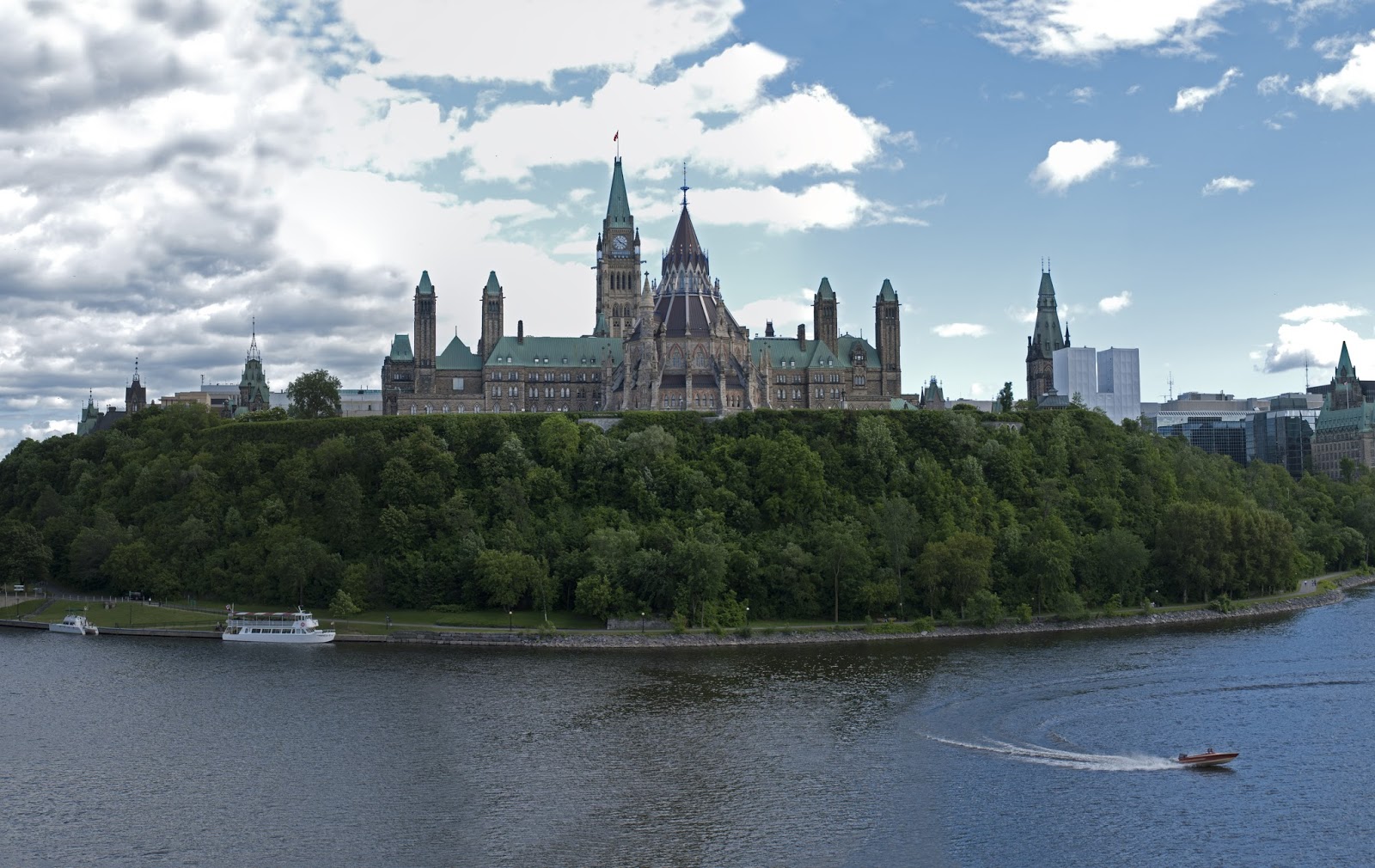
| A Feng-Shui spiral. (Arnold C.) |
No economy can remain static. It’s either growing or
shrinking.
Our way of life is based upon constantly expanding markets.
The notion that we can continue to improve standards of living while lowering
production and consumption flies in the face of everything we believe about
market capitalism. And in fact no one has had this notion. I think I’m the
first!
When you consider that I dropped out of school (upon
request) about halfway through grade ten, then that’s really saying something
about the intellectually sterile environment we’ve created in Canada.
Every business person realizes that if revenues are capped
at $100,000 then the only
way to increase profits is to cut costs. But that is an
assumption. You could sell fewer
units, while still generating the same revenue—simply raise
prices and lower production.
But no one ever thinks of it that way—lower costs by
creating efficiencies and driving up demand by reducing the number of available
units.
Yet this is all indicated by the currently-accepted theories
of economics! And I’m not saying that all the theories are self-justifying
bullshit. It’s just that one of the things a philosopher does is to invert
things—and see what falls out of its pockets.
And in this society at the present time, consumption drives
production, which drives employment, which drives taxation. That is one reason
why we now have half as many people living in homes that are twice as big as
our parents lived in. In some ways we are a victim of our own efficiency. The
housing industry is so competitive, that there is little profit in a 1,200
square-foot home, once the risk, liabilities, capitalization and time factors
are put into the equation. Why would a builder waste six months to earn a
profit of ten thousand dollars? He wouldn’t be able to live in the very houses
which he builds for others. It is far better to build a 4,500 square-foot home,
make fifty to a hundred thousand in profit, and at that rate, not only can you afford
to do it again, it’s even worthwhile. It still takes six months of his precious
time. The lot represents a fixed cost, so the bigger the building, the greater
the profit.
So the real problem is how to maintain standards of living
without conspicuous consumption, without over-production and without stagnating
wages and profits—because apparently the only path to prosperity for the
greatest number of people is to constantly expand consumption and production.
How is it possible, in a nation with a constitution and the
rule of law, to compel the rich, the powerful, the corporations and
institutions to make do with less? They don’t respect the law or any kind of
morality—they never have.
How can a CEO tell the shareholders, “We must lose money (or
reduce our expectations of profit,) for the next five years in order to make
these changes?”
Stock prices will fall. The CEO has ‘damaged’ the company
and the shareholders.
According to shareholders, “Surely it is not our
responsibility to save the world?”
(I say it is, actually, but no one listens to my absolutely
fantastic long-term investment
strategies. But then they want ‘big profits right now.’)
Only the poor can be compelled, for they don’t have the
ability to resist. Price increases affect them first, and the most, but they
don’t have the resources to invest in
newer, more efficient technologies.
Hydrogen-powered cars have been announced as being just around
the corner. Yet
a different source says, ‘They’re just a myth.’
In order to make hydrogen; ‘You have to burn methane,’ i.e.
a fossil fuel. And electric vehicles are really only about 30 % more efficient
than comparably-sized fossil fuel vehicles. In ten years your town will be
spewing out just as much pollution as it ever did…we’re trying to sell more
cars, after all, in order to employ more people to buy more cars, and homes,
and electricity…we must expand to increase profits…it’s a vicious circle
generated by conventional thinking and people and corporations who inevitably
put their own interest first, ahead of all other considerations; including
species-survival.
(Not just our own species, but every species.)
Battery-powered electric cars hold promise, but the required
increase in generation capacity must almost inevitably come from nuclear
technology, with all of its attendant problems.
Ford and GM and Chrysler do not want to build small,
efficient cars because there is
no profit. It starts to look like a very expensive little
car, in a very competitive market niche. To re-tool for hydrogen cars will take
billions in new investment. And the car
companies create unionized, middle-class factory jobs. This
makes for a nice block of
middle-class voters; all of them afraid as hell to rock the
boat or upset the status-quo,
which after all makes their own smug and comfy existence
possible.
It is a fact of human nature, “Those whose livelihood is
involved, cannot see the
problem.” And if you can’t see the problem then you can’t
even conceive of a solution.
They are simply unable to perceive the evil that they are
doing, by their persistence
and insistence on continued conspicuous consumption, for
surely a Hummer or a Ford
F-150 are nothing else. Most of those vehicles still have
one occupant and never carry a
serious load in the entire life-span of the product. It is
so much about status and so little
about utility that it is a kind of indictment of
middle-class ethics and morality.
Oh yeah, the middle class wants change, just don’t ask them
to contribute, or don’t put it in their neighbourhood, or both. One lady
objected to a solar farm due to ‘transformer
noise,’ yet one wonders if that farmland wasn’t noisier with
the trucks, tractors,
mini-bikes, flocks of blackbirds…worms digging in the soil.
She was simply an idiot. Her kitchen clock makes more noise! A middle-class
Canadian idiot, and we have many of them.
Where are you going to put the next nuclear reactor? I have
a couple of concerns as
well. These include the ‘not in my backyard’ syndrome, and
the usual cost overruns
associated with any project organized around government
patronage. In Sarnia-
Lambton, a petrochemical company was assembling a piece of
land for a refinery. No one
had any real environmental objections, and people were
disappointed when it failed to go
ahead. One wonders how they would have felt about nuclear
power.
We already have nuclear waste trucked down local highways,
and ending up in provincial landfills. We try real hard not to think about it
too much.
Local food production would reduce the carbon footprint of
our diet. For every ten
units of food energy, a hundred units of carbon are released
by the transportation and
processing of food. Local food production might employ a lot
of people, and that sounds
good in the middle of a depression. The problem is that
historically, we haven’t paid
folks like that enough to afford $400,000 homes. And it begs
the question of how can we
compete with a sixty-five cent New Zealand apple, shipped
and trucked twenty thousand
kilometres.
For some reason it’s called ‘global warming,’ but the
problem is really about our selfish lifestyles. Talking about waste isn’t sexy.
It’s pretty square. We have such great expectations for ourselves, but the
changes our world is undergoing carry a strong risk of the mass migrations of
peoples, war, revolution, famine and endemic disease. All of our standards of
living are going to fall. That is the big secret that no politician has the
courage to talk about, in fact they will tell you, “There’s nothing wrong with
our lifestyles.”
Middle class wages have been stagnant for about fifteen
years, the working poor have seen incomes fall over the same period. Only the
rich are doing well. So if our lifestyles are not going to fall, why are they
in fact falling? How do you explain it?
“Oh, I can assure you it’s not a conspiracy,” you might say.
I never asked about a conspiracy. You brought that up all on
your own.
If our lifestyles are killing the planet, then they are
simply immoral. That’s pretty
tough to accept. To call for a ‘carbon tax’ is politically
unpopular, but no one thought to
call it a ‘pollution tax.’ (I would call it an ‘ignorance
tax.’) The biggest shortage in this country is leadership, with any kind of
firm resolve, or clarity of vision. And the truth is that a lifestyle based on
greed, consumption and conspicuous waste, has become kind of immoral, and some people
are becoming quite alienated, like a kind of subculture.
The government is in no position to provide moral guidance,
and guys like me are in no position to run for election. I guess we’re pooched.
Now, in the perfect economy of the future, an artificial and
theoretical construct; all (or most) products and services will be intangibles,
such as financial planning, wellness consultation, motivational speaking and
literature, news-casting, e-publishing, etc.
What this means is that Canadians will be able to enjoy a
high standard of living without the need or benefit of unions, as everyone will
be self-employed. They will make good livings, based on the provincial $10.25
an hour minimum wages, and they never have to cut a tree down, skin a beaver,
dig up coal, put out a fishing net, or do any of the traditional
resource-export-based things we did in the past.
Once you get your head around this notion, then you will
quickly see that the perfect economy of the future is perfectly designed for
constant expansion of productivity—all products are useless and therefore
luxuries and therefore desirable, like a thousand ‘apps’ for your text service
provider’s ‘free phone,’ and oh! What a surprise when the monthly bill comes in
and it’s six hundred dollars.
I’ll be selling essays, or better yet, bartering them for
aromatherapy or feng-shui classes, getting my colours done and using my
cell-phone apps to keep track of my pedicure appointments, or my reservations
at ‘Grille 23.’ The pemmican is great, you should try it sometime.
In a world where ignorance is popular and superstition
sells, a bullshit-peddler like me or that nice Mister Kevin O’Leary on CBC should
make out all right.
Mr O’Leary and I agree on one thing for certain: people are basically
pretty stupid.
I guess the only solution would be a long-term program of
mass education by a disinterested and highly-honourable consortium of mass
media. Oh, sorry—we already have that. Right?
Anyhow, I'm off to class. At least now I know what a Feng-Shui spiral is.
END